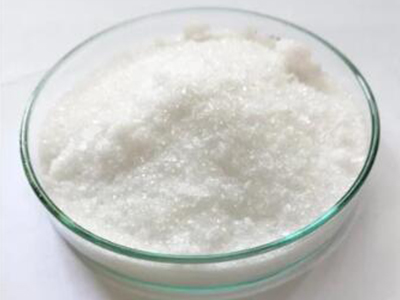
Monoammonium phosphate drying
Monoammonium phosphate (MAP), with the chemical formula NH₄H₂PO₄, is a widely used compound in agriculture as a high-efficiency fertilizer and in industrial applications such as fire retardants.
Monoammonium phosphate (MAP), with the chemical formula NH₄H₂PO₄, is a widely used compound in agriculture as a high-efficiency fertilizer and in industrial applications such as fire retardants. The drying process is a critical step in its production to ensure product quality, stability, and suitability for storage and transportation.
Purpose of Drying
After synthesis and crystallization, MAP typically contains residual moisture, which may lead to caking, reduced flowability, or chemical instability. Drying removes excess water to achieve a low moisture content (generally below 0.5%), enhancing the product’s granular integrity and shelf life.
Drying Methods
Industrial drying of MAP commonly employs the following techniques:
Fluidized Bed Drying: Hot air is forced through a bed of wet MAP particles, creating a fluidized state. This method ensures uniform heat transfer, rapid moisture removal, and controlled particle size.
Key Parameters
Temperature: Typically maintained between 50–80°C to prevent thermal degradation of NH₄H₂PO₄.
Airflow Rate: Optimized to balance drying efficiency and energy consumption.
Residence Time: Adjusted based on initial moisture content and desired final specifications.
Post-Drying Processing
Dried MAP is cooled, screened to remove oversized or undersized particles, and packaged in moisture-resistant containers to maintain quality.
Applications
Properly dried MAP ensures consistent performance in fertilizers (providing nitrogen and phosphorus) and as a fire retardant in materials like plastics and textiles. Its effectiveness in these roles depends heavily on achieving low moisture content and uniform particle distribution.
In summary, the drying of monoammonium phosphate is a vital industrial process that directly impacts product functionality and marketability. Advanced drying technologies and precise parameter control are essential to meet global demand for high-quality MAP.